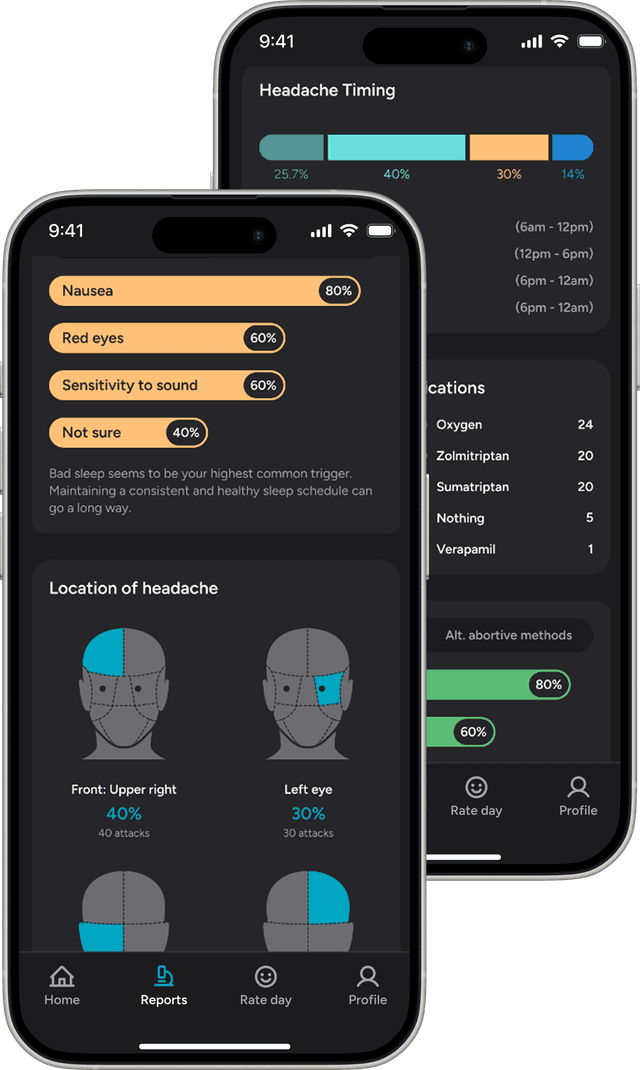
Download Today
Download MyClusters today and start understanding your clusters better!


Community Insights Report
Identifying gaps in care through patient voices
Authors
Arzu Burak, Parmin Zolfaghari, Walaa Al Haj Ali, Azra Özsert, Anouk van der Vliet, Fleur van Loon, Darshan Ramanagoudra, Lea Jabbarian
MyClusters · Erasmus MC
Background
Cluster headache (CH) is a rare and extremely painful form of primary headache, affecting an estimated 0.1% of the world population. It is characterised by unilateral, recurrent attacks of severe periorbital pain, often accompanied by autonomic symptoms.
Several studies suggest that CH is associated with substantial psychological comorbidity. This study explored the lived experience of patients with CH, its psychological impact, perceived shortcomings in the current healthcare trajectory, and the strategies patients use to improve their quality of life.
Semi-structured interviews were conducted with eighteen participants with a clinically confirmed diagnosis of cluster headache in the Netherlands.
Participants
Sex
Type of CH
Diagnosed By
100% of participants rated pain intensity at 8/10 or higher
Physical Impact
All participants reported experiencing somatic comorbidity alongside headache attacks. Attack frequency varied from 0 to 15 per day, with durations ranging from 10 to 660 minutes.
*Cramps were reported in varying locations across participants.
Before an Attack
Environmental factors such as temperature changes and seasonal shifts were the most commonly reported triggers. Lifestyle factors such as sleep, alcohol consumption, and stress were also mentioned as triggers preceding an attack.
Patient Voices
All participants reported a significant impact of CH on their daily functioning, often demanding changes in living or working arrangements, continuous medication management, and limitations in social and future planning.
Mental Health
Healthcare
Participants reported various shortcomings in the current treatment approach and healthcare communication. A clear need was expressed for better coordination among healthcare professionals and the development of integrated, multidisciplinary care pathways.
Many participants felt that their pain is underestimated by healthcare professionals and often equated with "regular headaches". This lack of validation contributes to frustration, panic, and despair.
expressed a desire for more empathy and understanding from healthcare providers
Outlook
Participants highlighted the need for recognising the psychological impact of cluster headaches. Their pain is often underestimated by healthcare professionals, contributing to frustration, panic, and despair.
Develop integrated, multidisciplinary care pathways with better coordination among healthcare professionals. Follow-up consultations should address daily functioning and mental well-being, not just attack frequency.
Participants expressed a desire for more empathy and understanding from healthcare providers. Greater recognition of the severity and psychological burden of this condition is urgently needed.
Advocate for a more transparent approach to treatment options with active patient involvement in decision-making. Participants want more information about medication mechanisms, administration, and side effects.
A need for psychological support, including learning about self-management tools, was expressed. More than half of participants saw improvement through more adaptive coping strategies or professional psychological support.
Download MyClusters today and start understanding your clusters better!